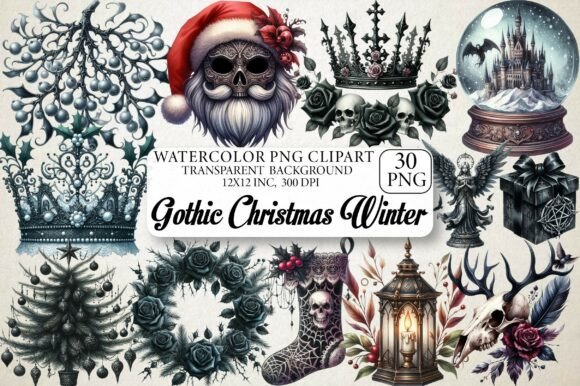
Gothic Christmas Winter Clipart: A Designer’s Review
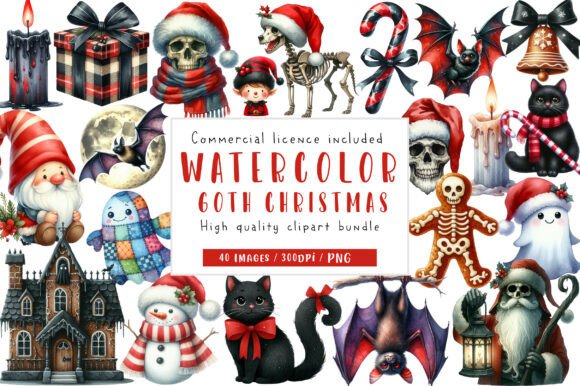
When I first pulled up Gothic Christmas Winter Clipart on my screen, the immediate contrast struck me. We are so accustomed to the traditional reds, greens, and cheerful snowmen of the holiday season that seeing a winter theme interpreted through a darker, more atmospheric lens feels refreshing. As an embroidery designer who spends hours digitizing and testing files for real-world application, I look beyond the initial aesthetic. I need to know if a design will hold up under the needle, how it translates to fabric, and whether it offers genuine value to my clients or shop customers. This review breaks down how these illustrations perform when moved from a digital screen to a tangible, stitched reality.
The Visual Mood and First Impressions
The mood of this collection is distinct. It leans into the quiet, mysterious beauty of a winter night rather than the chaotic joy of Christmas morning. The lines are often sharper, with a focus on silhouettes, bare branches, and perhaps architectural elements that hint at Victorian or medieval influences. For an embroidery project, this visual personality dictates the approach. You cannot treat these designs like standard cartoonish holiday motifs. They require precision. The lack of excessive clutter in the imagery is a benefit, as it allows the texture of the thread to become part of the story. When evaluating Gothic Christmas Winter Clipart, I am looking for clean paths that will not turn into a tangled mess of thread on textured fabrics.
Real-World Application: From Screen to Stitch
To truly test the viability of any design asset, I imagine it on specific products. Recently, I was preparing a custom order for a boutique client who wanted something different for their holiday line. Instead of the usual aprons, they were launching a line of heavy-weight canvas tote bags and structured wool caps. This is where Gothic Christmas Winter Clipart shines. The stark, high-contrast nature of these illustrations works exceptionally well on dark fabrics. Imagine a deep charcoal or black tote bag with a silver or icy blue embroidered motif. The design does not get lost; it pops.
For sweatshirt embroidery, the thicker fabric provides a stable base for fill stitches. If the clipart includes detailed elements like intricate ironwork gates or dense pine forests, a sweatshirt can handle the stitch density without puckering. However, for baby embroidery or delicate items like silk pillow covers, I would proceed with caution. The "gothic" element often implies complexity. On stretchy or thin fabric, complex details can distort. I would recommend scaling back the size or simplifying the stitch types for such applications.
Technical Considerations for Embroidery Designers
Translating Illustrations into a machine embroidery design requires careful attention to stitch types. Satin stitch is ideal for the bold, linear elements often found in gothic themes, providing a smooth, shiny finish that catches the light. However, if the clipart features large shaded areas, you must rely on fill stitch. Here, stitch density becomes critical. Too dense, and the fabric will pucker or the thread will break; too sparse, and the backing shows through, ruining the illusion. Running stitch can be used effectively for fine details, such as the tips of branches or subtle outlines, adding a hand-drawn feel to the finished product.
One major factor to consider is the hoop size. Many gothic designs are vertical or tall. Ensure your machine’s hoop size can accommodate the full height of the design without requiring re-hooping, which can lead to alignment issues. Always test the design on scrap fabric first. This is non-negotiable. Check how the thread colors interact with your chosen fabric. A dark thread on a dark fabric might look sophisticated in a mockup but disappear entirely in person. Use proper stabilizer to support the weight of the stitches, especially if you are working with knit fabrics for custom apparel.
Navigating Challenges in Production
While the aesthetic is strong, there are pitfalls. Small hoop sizes can be restrictive. If you are creating an embroidered patch, you may need to simplify the design significantly. Tiny lettering, if included in the clipart, is often a nightmare in embroidery. Thread has thickness; it cannot replicate the fine lines of a digital font. I advise removing or enlarging any text elements before digitizing. Additionally, curved surfaces like caps present a challenge. The design must be centered perfectly, and the stitch direction should follow the curve of the cap to prevent distortion.
Another consideration is washability. Items like kitchen towels or baby clothes undergo frequent washing. Dense stitch areas can become stiff over time. For these items, consider using applique design techniques where fabric pieces are stitched down, reducing the amount of thread on the back and keeping the item softer. This is particularly useful for larger motifs within the Gothic Christmas Winter Clipart set.
Commercial Value and Brand Consistency
For Etsy sellers and small shop owners, uniqueness drives sales. Using generic holiday designs saturates the market. Gothic Christmas Winter Clipart offers a niche appeal. It attracts customers looking for personalized gifts that stand out. Whether it is a wedding gift for a winter ceremony or a unique piece of boutique branding, this style conveys sophistication. It builds customer trust because it shows thoughtfulness and artistic intent. When you use high-quality design assets, your finished product looks professional. This professionalism translates to higher perceived value, allowing you to price your handmade products more competitively.
Digital product sellers can also leverage these illustrations. Creating printable mockups or digital embroidery files based on this theme can expand your revenue streams. However, always confirm licensing before selling finished items or digital products. Not all clipart is cleared for commercial embroidery use. Check the terms carefully to ensure you are protected.
Final Verdict and Practical Tips
In conclusion, Gothic Christmas Winter Clipart is a powerful tool for designers willing to step outside traditional holiday norms. It performs best on stable, darker fabrics where its contrast can be fully appreciated. It is ideal for tote bag designs, sweatshirt embroidery, and decorative home decor items like pillow covers. Avoid using it on highly stretchy or delicate fabrics without significant modification and testing.
- Test on scrap fabric: Always run a sample to check stitch density and tension.
- Check thread contrast: Ensure your thread colors stand out against the fabric background.
- Verify hoop size: Make sure the design fits your machine’s capabilities without re-hooping.
- Use stabilizer: Essential for maintaining shape, especially on knits or loose weaves.
- Confirm licensing: Ensure the file allows for commercial use if you plan to sell the final product.
By approaching this design with a critical eye and practical preparation, you can create stunning, high-quality embroidery projects that resonate with customers seeking something truly unique. The key is respecting the material limits of thread and fabric while leveraging the strong visual identity of the gothic winter theme.